Young Scot celebrates European youth information milestone with Quality Label reaccreditation
Young Scot has renewed the European Youth Information Quality Label for a further three years, reaffirming its commitment to ensuring young people can access impartial, reliable and quality-assured information.
The reaccreditation follows a successful review against recognised standards for youth information provision, providing an important endorsement of the quality and integrity of Young Scot's work.
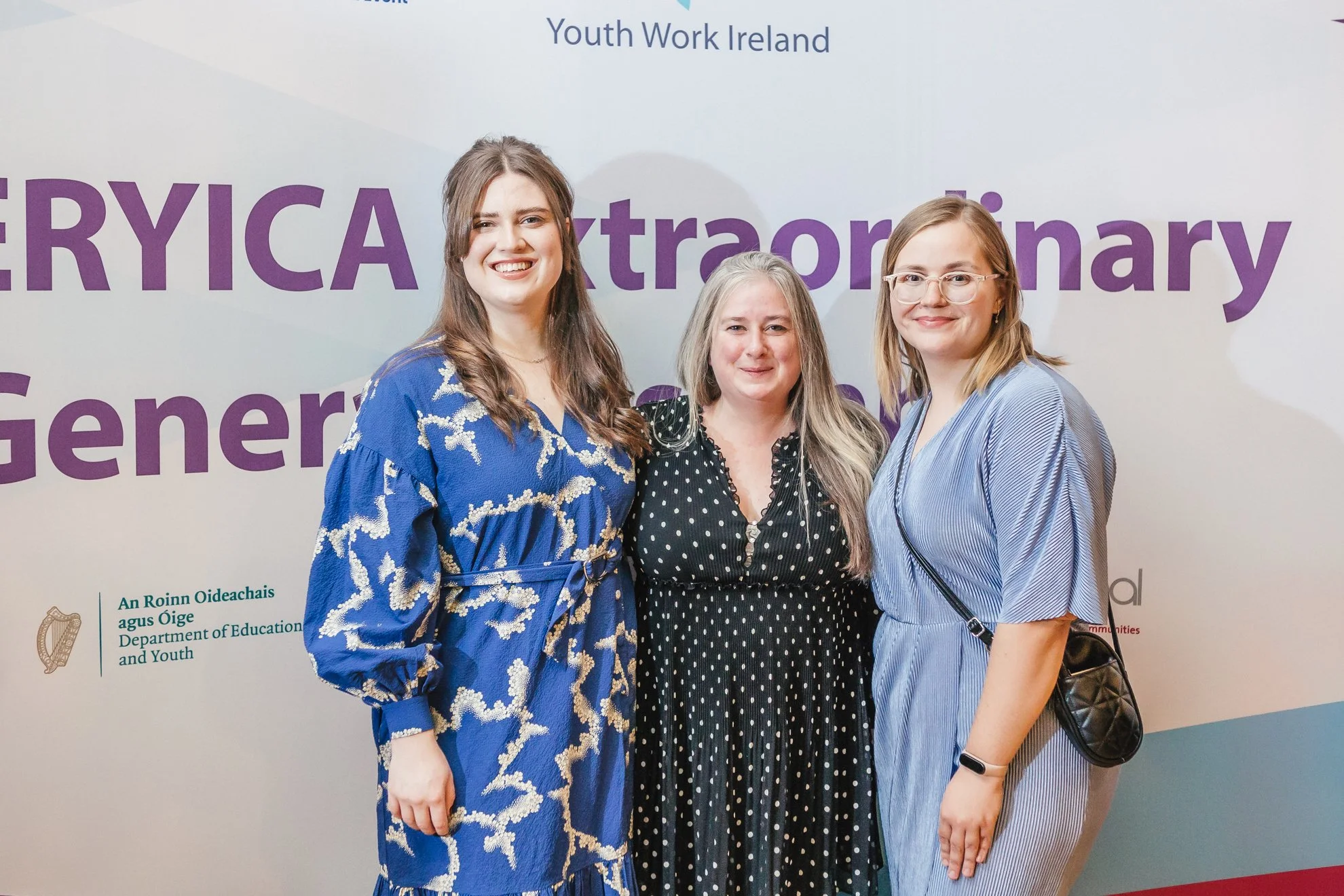
The announcement comes as Young Scot joined organisations from across Europe in Dublin for the Extraordinary General Assembly of the European Youth Information and Counselling Agency (ERYICA), which is celebrating its 40th anniversary.
ERYICA brings together youth information organisations across Europe, supporting collaboration, shared learning and the development of high-quality youth information services. Young Scot's participation reflects its longstanding commitment to this wider European network and to ensuring young people in Scotland remain connected to international opportunities and developments in youth information.
Recognising the importance of trusted information
The European Youth Information Quality Label, developed through a partnership between the Council of Europe and ERYICA, recognises organisations that meet established standards in providing young people with information they can trust.
Young Scot's reaccreditation has also been recognised through a motion lodged in the Scottish Parliament, highlighting the importance of reliable information in helping young people understand their rights, make informed decisions and participate in democratic life.
This recognition comes at a time when young people are navigating an increasingly complex digital landscape, making access to impartial, trustworthy information more important than ever.
Exploring the future of youth information
Alongside celebrating ERYICA's anniversary, the gathering provided an opportunity for organisations to share experiences, explore emerging challenges and consider how youth information services need to evolve.
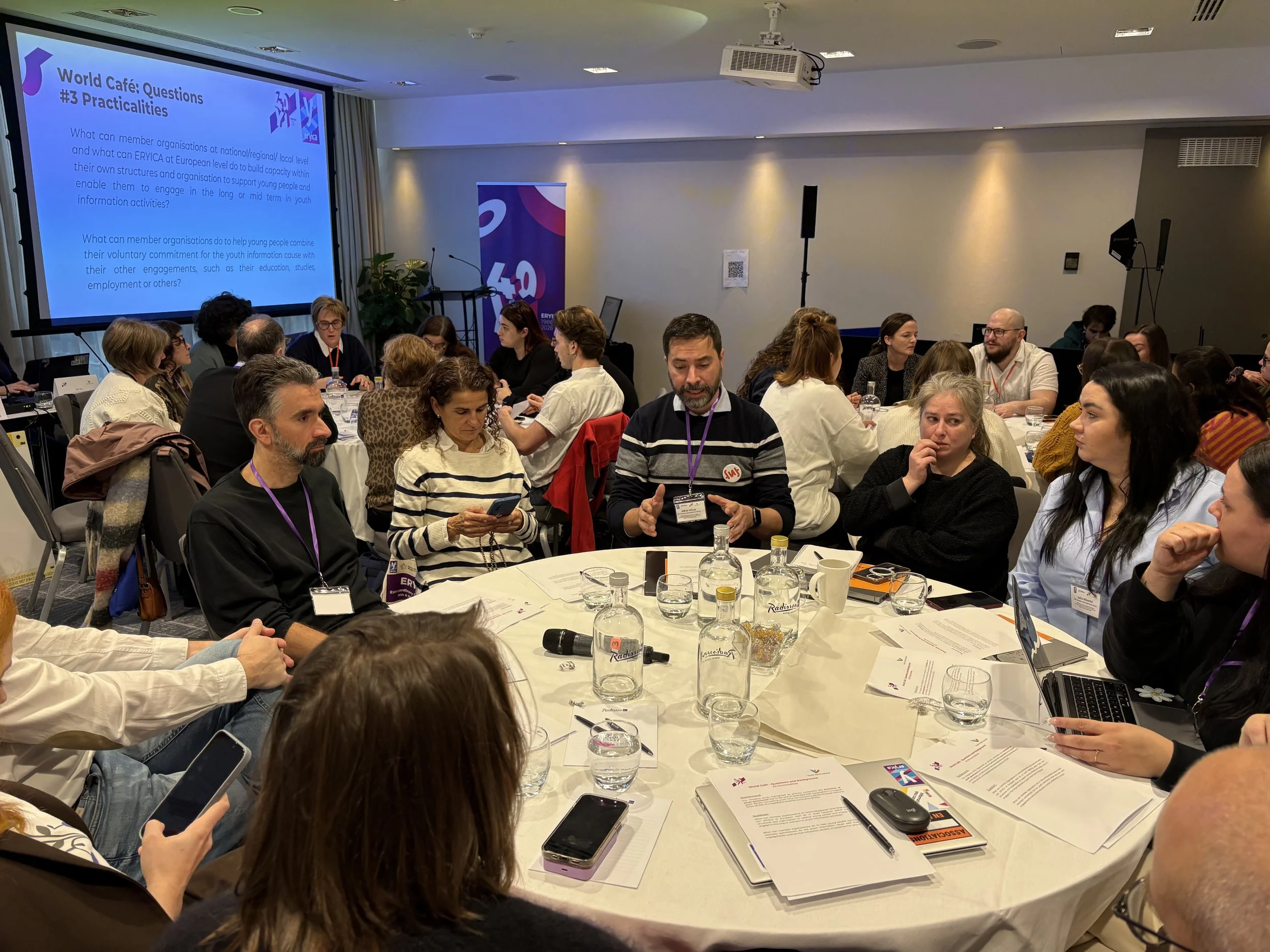
Discussions explored the changing information landscape, including the influence of AI, the spread of mis- and disinformation and the role of reliable information in supporting democracy and participation.
A key theme explored criteral literacy promotion and the challenges and opportunities for the role youth information organisations to provide impartial guidance and help young people develop the confidence and skills to navigate an evolving digital world.
The discussions also looked beyond the information itself to consider a fundamental question - how do we make sure youth information reaches everyone who needs it?
Organisations explored the challenges of engaging young people everywhere, including those living in rural communities, facing language barriers or not in formal education. Reaching beyond established networks and finding new ways to connect with these groups is essential if youth information services are to be genuinely accessible and inclusive.
Learning and working together across Europe
A key value of being part of the ERYICA network is the opportunity to recognise that these challenges are shared across countries, while learning from the different approaches organisations are taking to address them.
Exchanging good practice and exploring new ways of working helps strengthen youth information services and ensures organisations can continue responding to the changing needs of young people.
As ERYICA celebrates 40 years of connecting youth information organisations, Young Scot is proud to contribute to this shared ambition.
Another milestone during the gathering was the signing of a Memorandum of Understanding between Eurodesk, ERYICA and the European Youth Card Association (EYCA), strengthening collaboration across the three European networks. EYCA was represented at the signing by Young Scot representative Juno Brown, who was an invited in her capacity as an EYCA Board Member.
The anniversary gathering also coincided with the launch of Erasmus+ applications through the British Council, highlighting the continued importance of European connections in opening up opportunities for young people in Scotland.
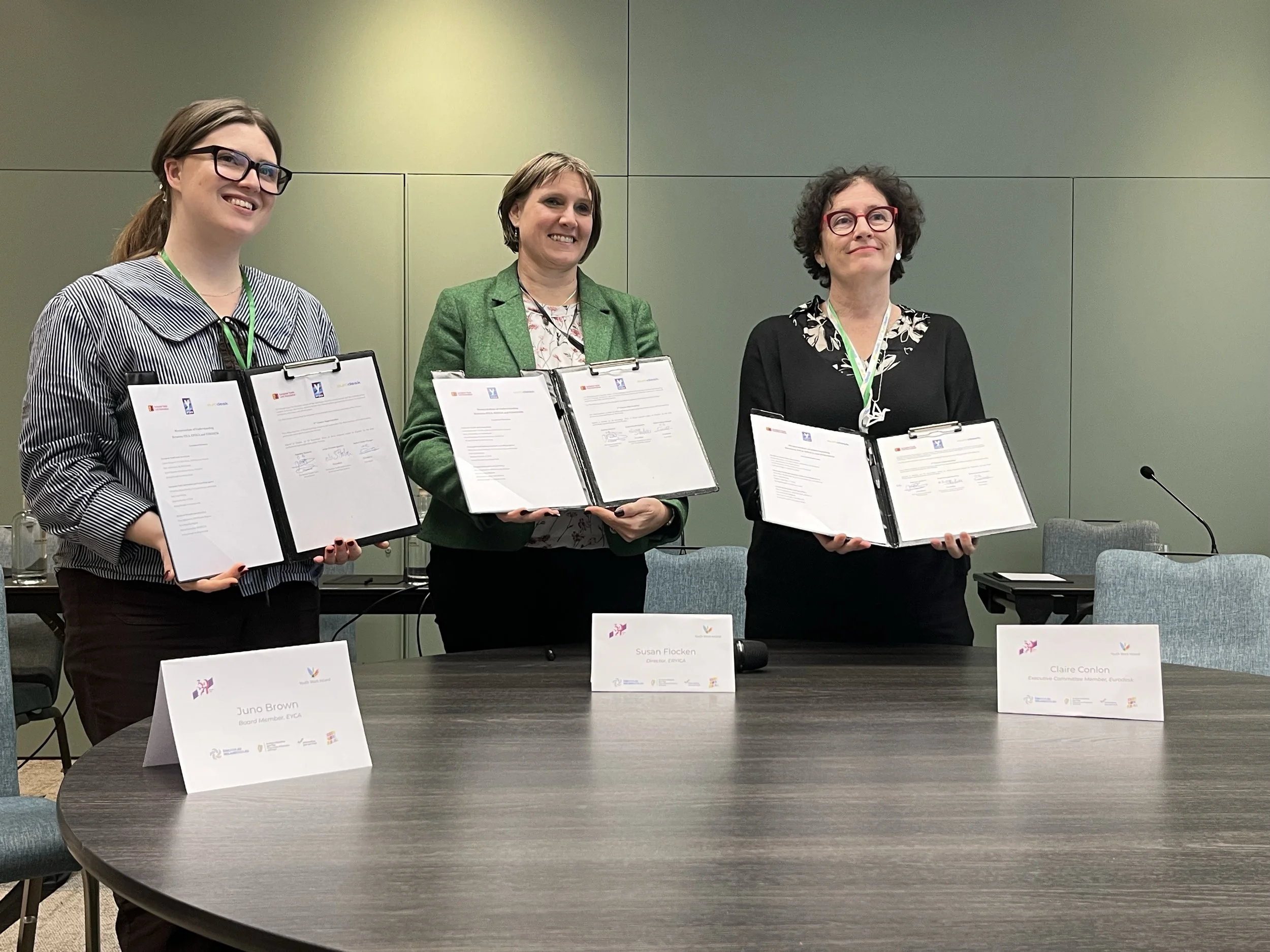
Juno Brown (EYCA/Young Scot); Susan Flocken (ERYICA); Claire Conlon (Eurodesk).